Please Check Install Directory Permissions and Try Again
Errors on your WordPress site tin can boring down your work and create serious inconveniences for both you and your users. For instance, the "Installation failed: could not create directory" bulletin can prevent you from providing a key feature or functionality.
Luckily, resolving this error is adequately simple. Past tweaking simply a few settings, you tin easily become your WordPress plugin or WordPress theme upward and running in no fourth dimension.
In this postal service, nosotros'll discuss what causes this mistake and other issues related to it. And so we'll walk you through three methods for resolving the "Installation failed: could not create directory" message then that you tin can complete your installation or update.
Let'south get started!
What Causes the "Installation Failed: Could Not Create Directory." Error in WordPress
There are iii primary situations in which you might run across the "Installation Failed: Could Not Create Directory." fault in WordPress:
- When installing a theme or plugin via your WordPress dashboard
- During a standard theme or plugin update
- While attempting to upload files to the wp-content directory on your server
The root cause of the problem is the same in each scenario. However, let'south have a look at each of these situations in turn.
Installing a New Theme or Plugin on Your Site
Your WordPress site is fabricated up of two components: a database and diverse files that are stored on a server in 'directories.' When you use WordPress admin to add together a theme or plugin to your site, it has to create a new directory in which to save its files.
However, if the plugin or theme yous're attempting to install does not have permission to write in your website's root directory, it won't exist able to complete this task. That's when you'll see an error such as "Installation failed: could not create directory."
This error is your server'due south style of saying that you're non allowed to make changes to your site's files by calculation the plugin or theme in question. In general, this is a problem that usually occurs on new WordPress sites.
It's important to note that there is a similar, less common crusade for this error. If your server is running out of deejay space to store your site's files, it may prove this same bulletin because it has no room for the new plugin or theme. Read this guide to check deejay usage in WordPress.
This may be due to old backup files not being deleted, or information technology may happen because your hosting plan is too minor for your site. In the latter case, you'll desire to look into upgrading to another hosting package that provides more storage.
Updating an Existing Theme or Plugin
Sometimes, when attempting to upgrade a WordPress theme or plugin that'due south already installed on your site, y'all may see an error very similar to the one nosotros've described above. This one volition typically read, "Update failed: could not create directory."
This problem occurs for the same reasons as the "Installation failed could not create directory." error. When you update a WordPress plugin or theme, WordPress needs to rewrite its files on your website'due south server. If your permissions settings are incorrect or there is not enough complimentary infinite, the process will non be able to access the right files or upload new ones.
Since the crusade of these two issues is the same, the solutions are identical too. Any methods for resolving the "Installation failed: could non create directory" fault listed beneath should as well work for a stalled update.
Uploading Files to the wp-content Directory
Server file permissions are a security feature that hosting providers put to prevent unauthorized parties from making changes to your site or stealing sensitive information.
However, they can sometimes lock you out of your own files if they aren't set correctly.
This is why, if you try to get effectually the "Installation failed: could not create directory." error in your WordPress dashboard past uploading the plugin's or theme'due south files direct to the wp-content directory on your server, you'll likely withal encounter the same trouble. The error occurs because of a problem with your server, non your WordPress installation.
This issue may besides extend to your wp-content/uploads subdirectory, where all your media files are stored. Calculation images, videos, or similar content to your site past saving them to your server follows the same process as installing a new plugin or theme.
If y'all don't take permission to write in your root directory, uploading content to wp-content/uploads volition yet produce the fault we've been discussing. To fix it, you lot'll need to adjust your server's settings, as we'll draw soon.
Diagnosing the "Installation Failed: Could Not Create Directory." Fault in WordPress (two Methods)
The adept news about this fault is that it's relatively easy to set up. Nearly of the time, correcting your permissions volition clear everything right up. However, before you lot start work on that solution, you may want to make certain that information technology can solve your problem.
Below, we've outlined two methods for determining whether your site is experiencing a permissions-related error.
ane. Use the WordPress Site Health Tool
WordPress v.ii introduced the Site Health tool. It contains a wealth of valuable information regarding your WordPress site, such as performance test results, security checks, and WordPress configuration information.
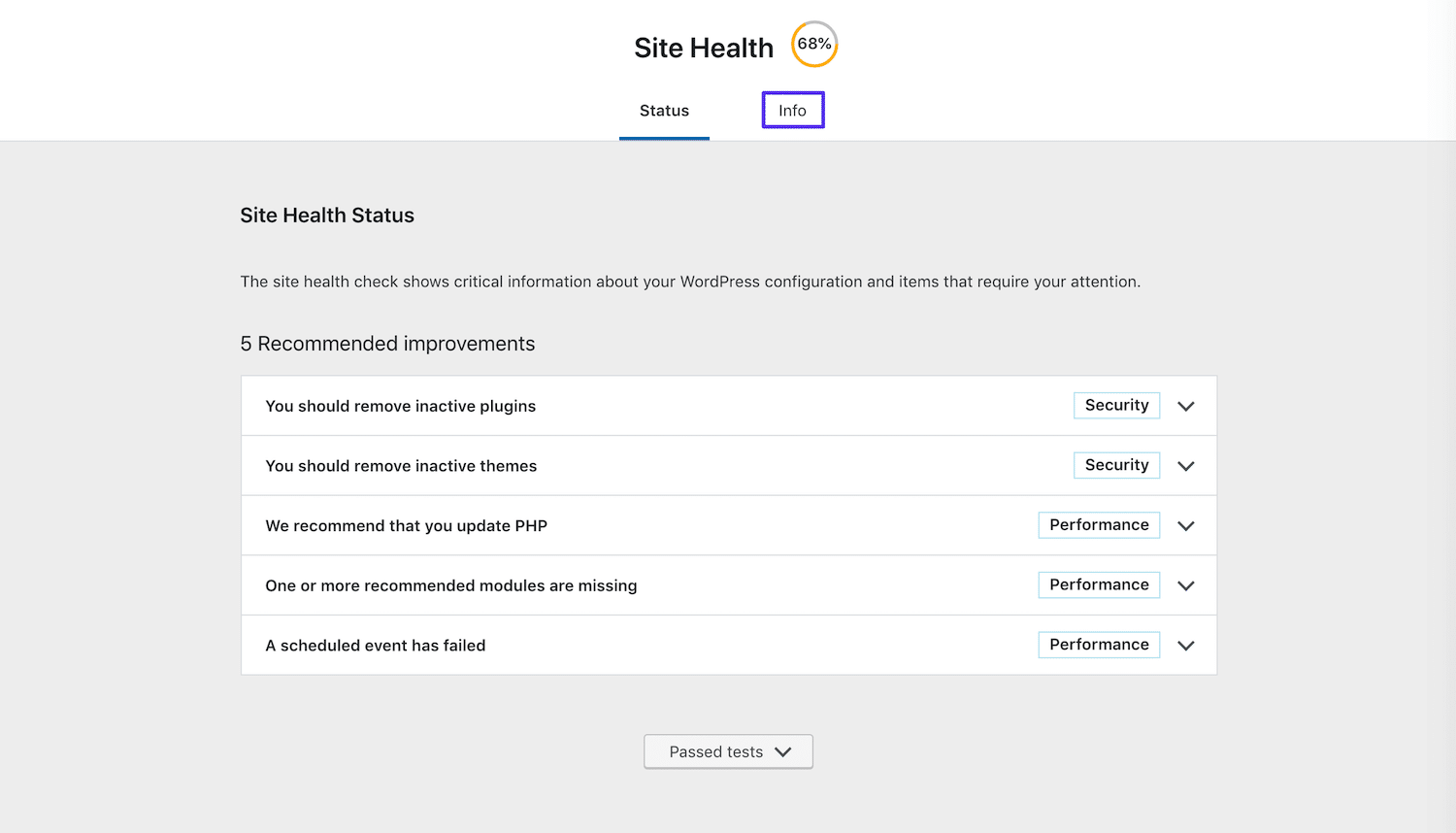
You can admission it past navigating to Tools > Site Health in your WordPress dashboard. To check your file permissions settings, you lot'll want to click on the Info tab:
Subscribe Now
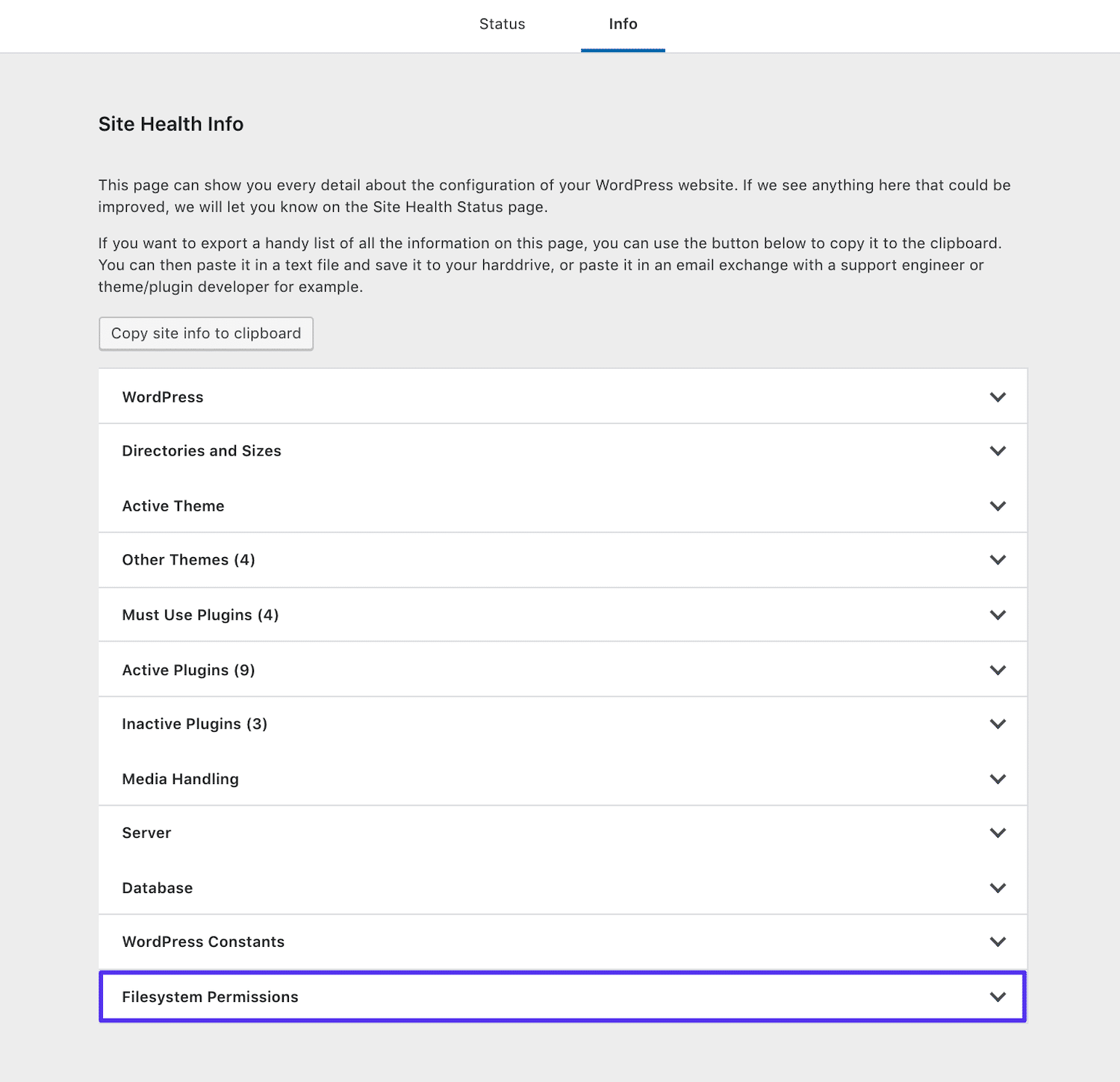
Then, roll down to the last section, which should be labeled Filesystem Permissions:
Here yous'll encounter a list of crucial WordPress files, including the plugin and theme directories. Ideally, they will all exist listed every bit "Writable":
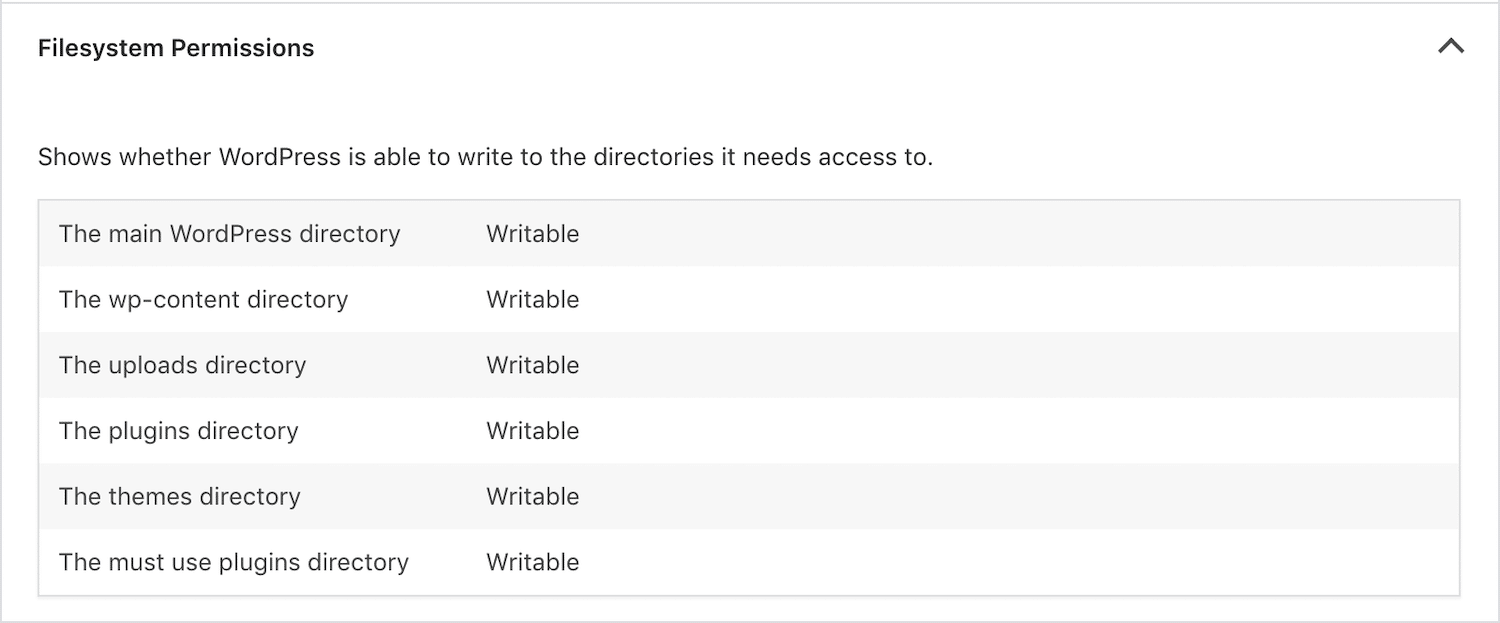
If your permissions are not configured correctly, you'll see "Not writable" listed next to the problematic folders. If this is the example, you lot'll know that you demand to correct your file permissions.
2. Check Your Server's Error Log
Another option is to check your server's mistake log. This may be a more efficient method, as it will display whatever errors that have occurred, not merely incorrect file permissions. You lot should be able to access your logs via your hosting account.
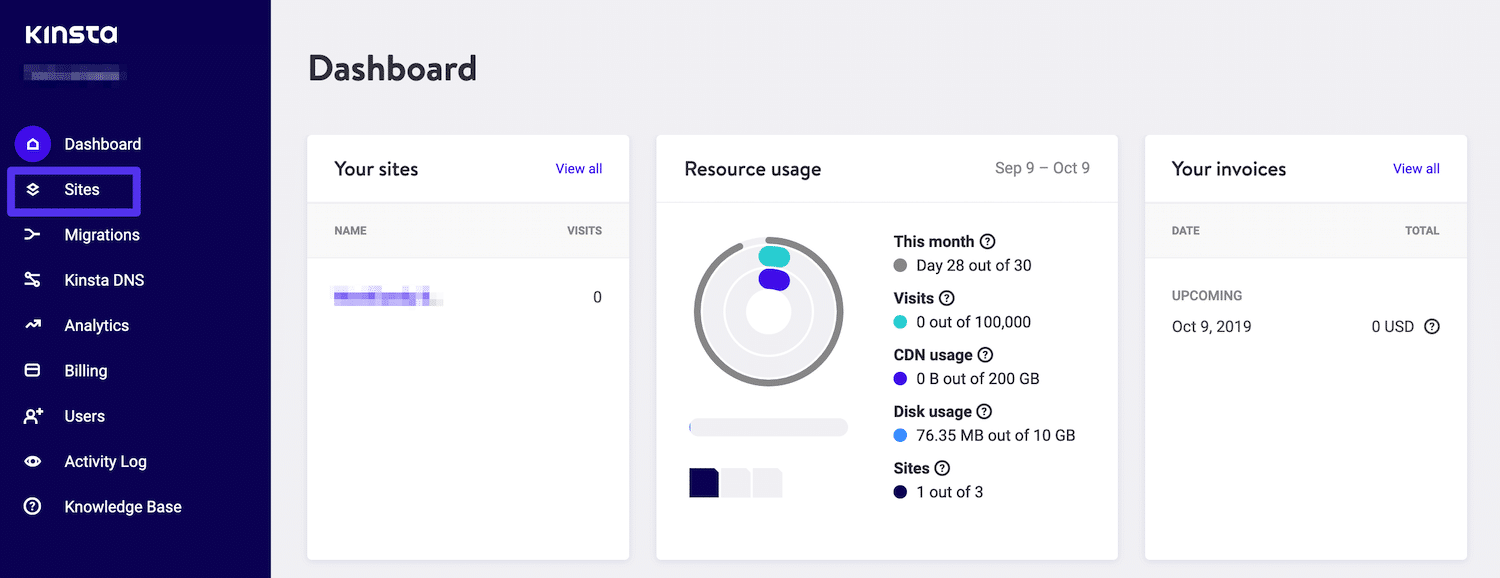
If you're a Kinsta customer, y'all tin log into your MyKinsta dashboard and click on Sites in the sidebar:
Select the site's name that is experiencing the "Installation failed: could non create directory" error. Then, cull the Logs tab:
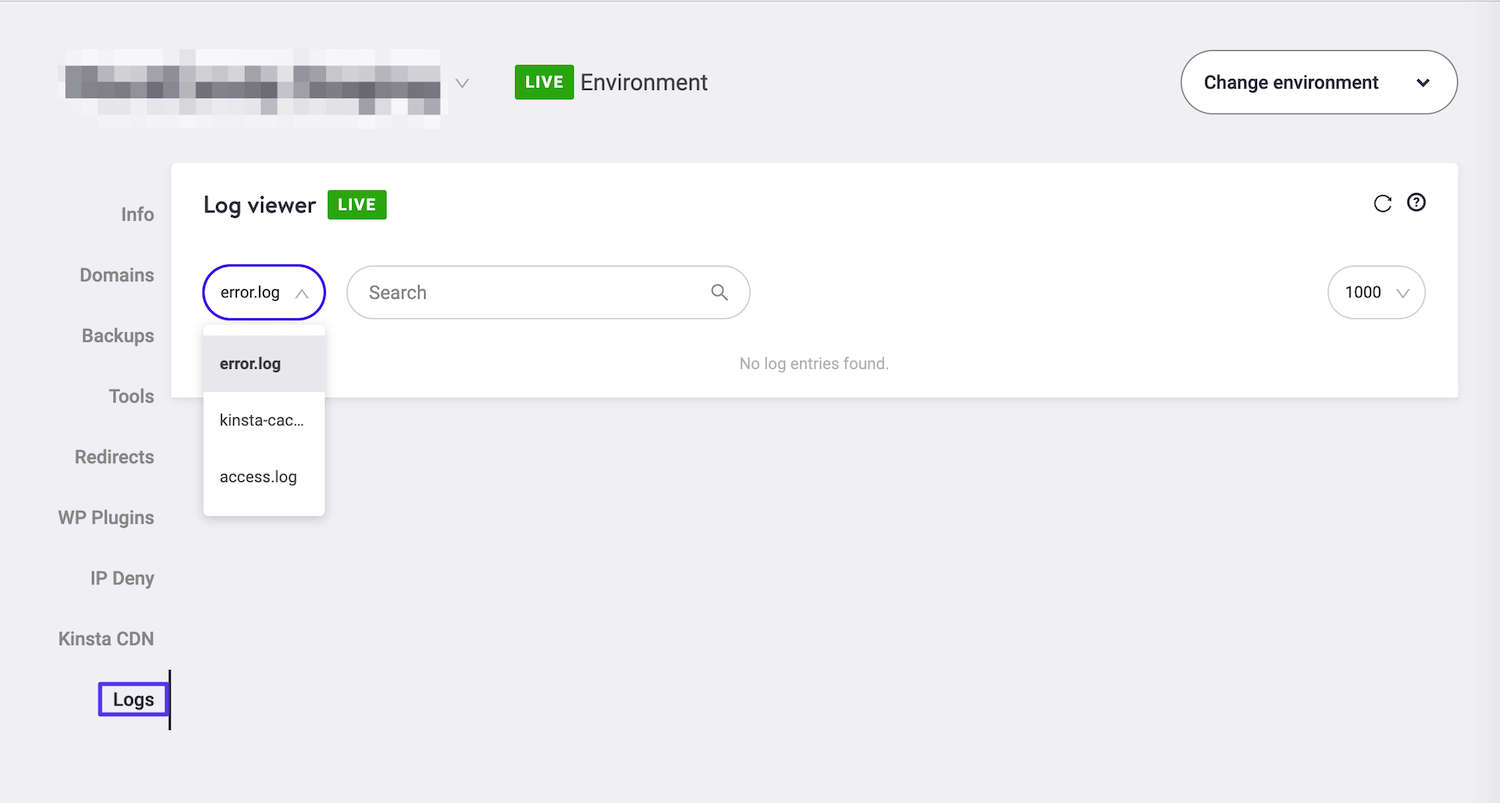
From the driblet-down bill of fare, brand sure that error.log is selected. Here, you should be able to see any recent errors that have occurred on your server, including incorrect file permissions or insufficient storage, either of which may be causing the installation error.
If yous encounter a relevant error listed, you can either correct your file permissions or consider upgrading your hosting plan as needed.
How to Fix the "Installation Failed: Could Not Create Directory." Error in WordPress
If your site's permissions settings are causing the "Installation failed: could not create directory error," you can resolve it by resetting them. To practise so, you'll need to connect to your server via File Transfer Protocol (FTP), using an FTP client.
Any time you make changes to your site's files, it's wise to create a backup first, just in case something goes wrong and you demand to restore your site. Then, collect your FTP credentials from your hosting account.
As a Kinsta client, you lot can do this by accessing the Info tab for your site in the MyKinsta dashboard:
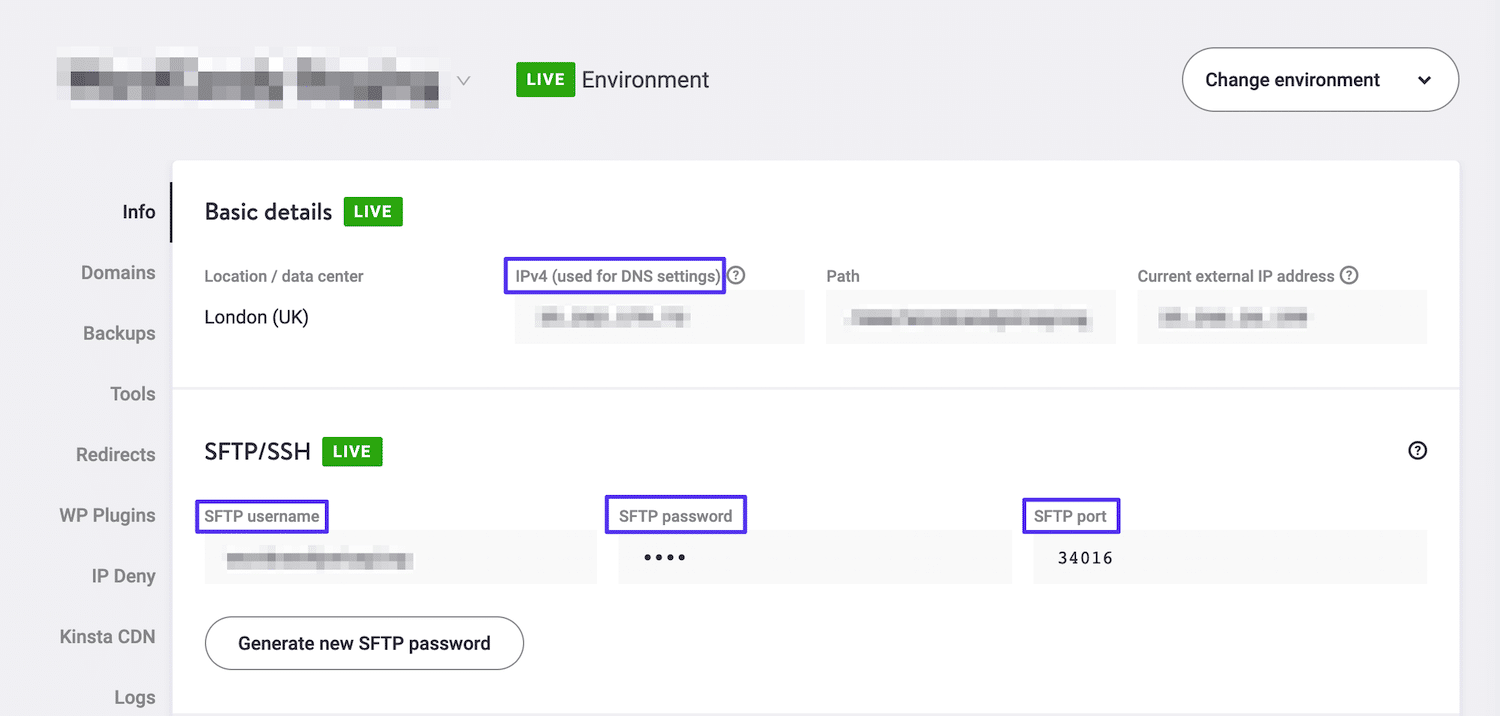
Then, open up FileZilla (or another client) and enter your information. Yous'll be continued to your server, where you should come across a folder called public_html. Double-click on information technology to view your WordPress files:
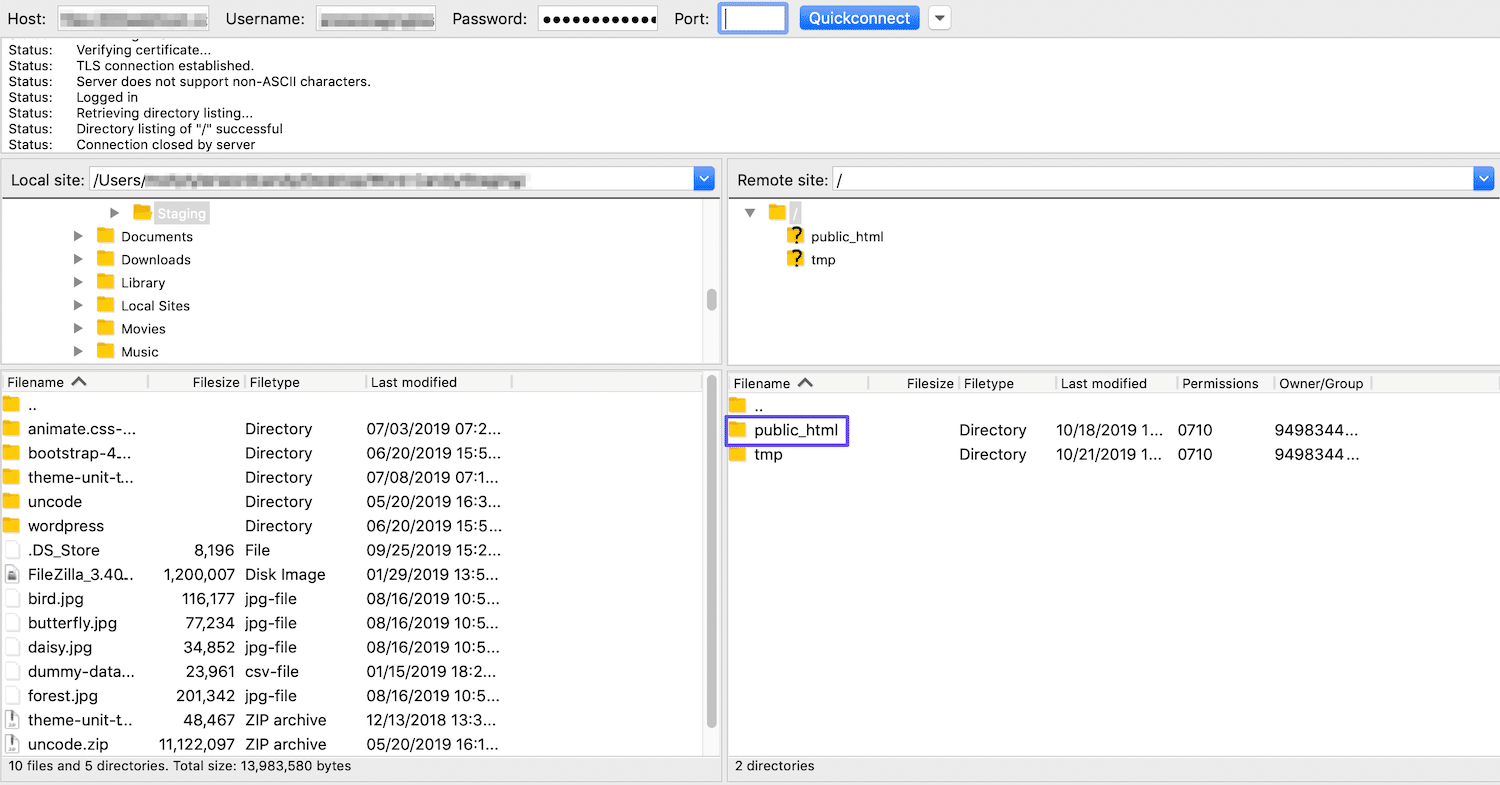
If you don't come across all the files, here is a guide on how to show subconscious files in Filezilla. After that, select the folders labeled wp_content, wp_includes, and wp_admin. Correct-click on them and choose File Permissions:
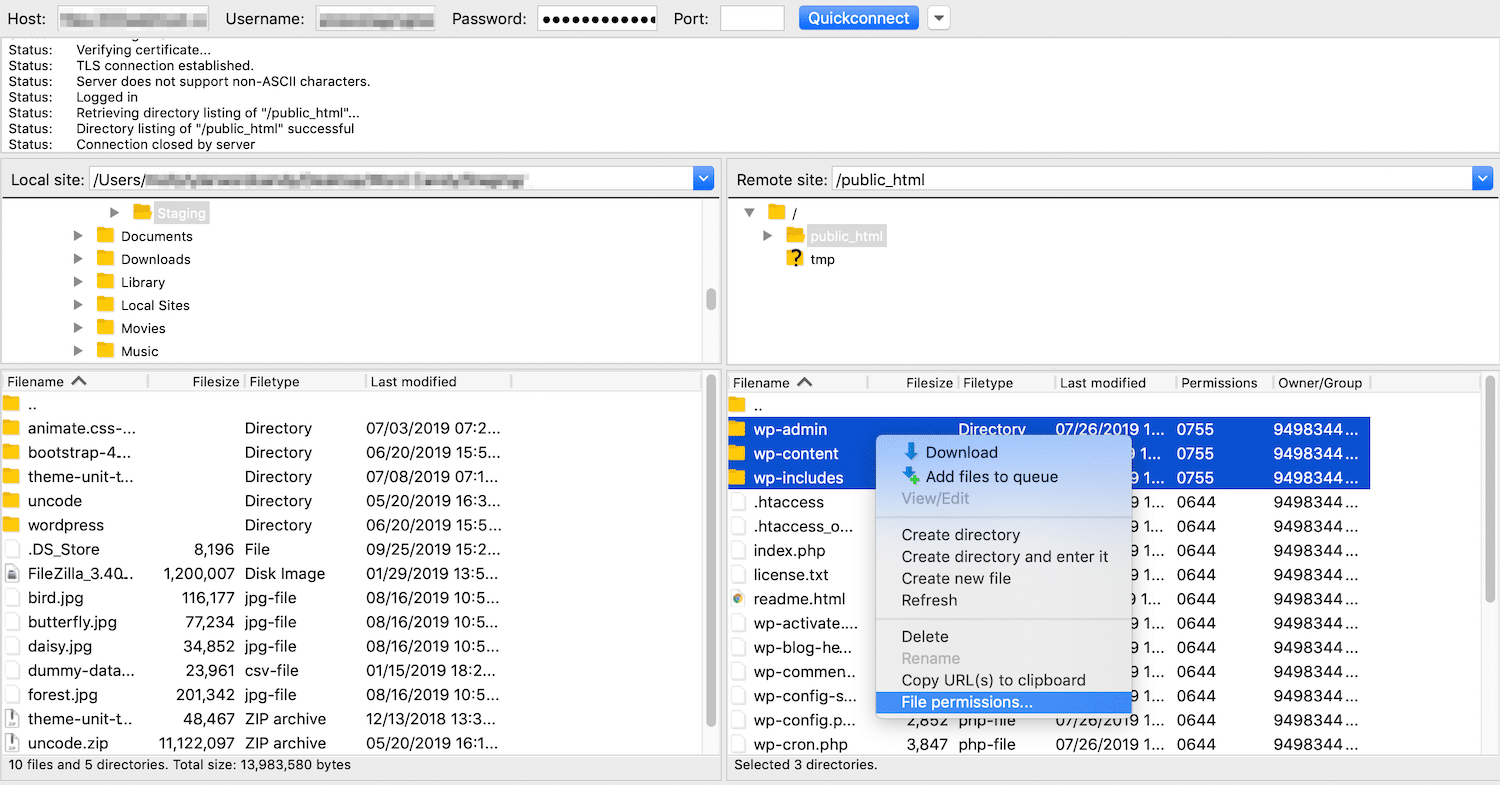
You should come across a window that contains a handful of settings:
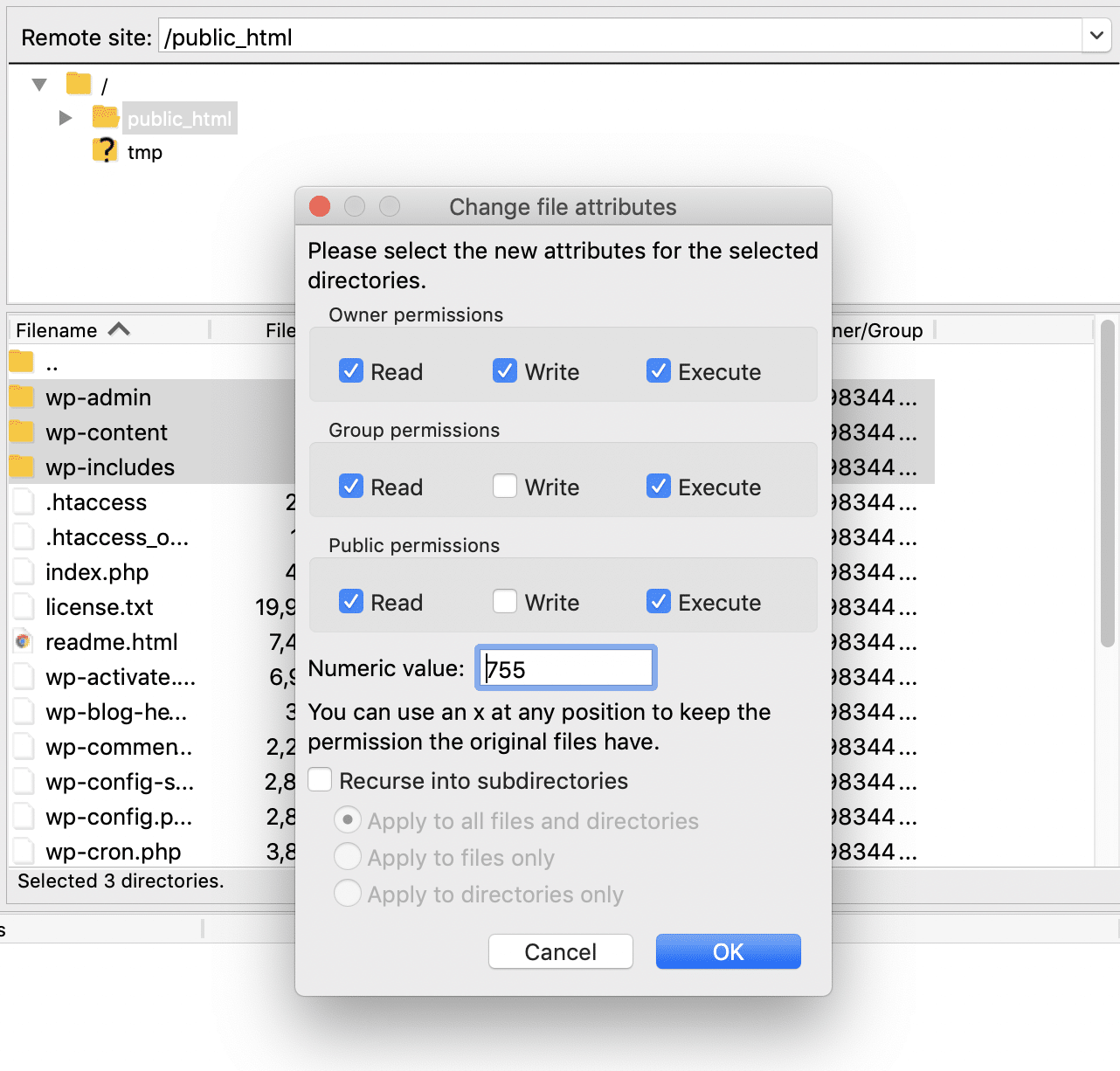
Check that the options here are fix to the following values:
- Possessor Permissions: Read, Write, Execute.
- Group Permissions: Read, Execute.
- Public Permissions: Read, Execute.
- Numeric value: 755.
- Recurse into subdirectories.
- Apply to directories only.
Click on the OK push button to close the window. Now return to your site and endeavour to install or update the plugin/theme over again.
It'south worth noting that some hosting providers, including those that employ cPanel, have their ain tools yous can use without bothering with FTP/SFTP. You lot tin often detect this tool by logging in to your hosting account, navigating to the site experiencing the fault, and looking for a File Managing director.
Summary
Your WordPress site'due south plugins and themes provide important functionality for you and your users. Encountering an error when installing or updating one tin can throw a wrench in your plans and slow down your progress.
To determine if a file permissions event is causing a plugin or theme installation error on your site, you tin use the Site Wellness tool or check out your server'southward error log. Later that, resetting your permissions using FTP/SFTP should only take a few minutes.
Salvage time, costs and maximize site performance with:
- Instant help from WordPress hosting experts, 24/vii.
- Cloudflare Enterprise integration.
- Global audition reach with 29 information centers worldwide.
- Optimization with our built-in Application Performance Monitoring.
All of that and much more than, in one plan with no long-term contracts, assisted migrations, and a 30-day-money-back-guarantee. Check out our plans or talk to sales to find the plan that's right for you lot.
Source: https://kinsta.com/knowledgebase/installation-failed-could-not-create-directory/
0 Response to "Please Check Install Directory Permissions and Try Again"
Post a Comment