Read Lair of the Lion Online Free
Lions: The Uniquely Social 'King of the Jungle'
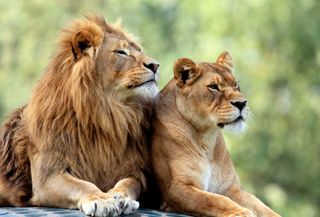
Lions are the 2d-largest cats in the world, after tigers. Known as the "male monarch of beasts" or "male monarch of the jungle," these regal felines in one case roamed Africa, Asia and Europe, but now just live in parts of Africa and India.
Experts have long recognized two subspecies of lion, Panthera leo leo (the African lion) and Panthera leo persica (the Asiatic king of beasts). Yet, recent studies suggest that lions from West and Key Africa are more than closely related to Asian lions than they are to lions from the eastern and southern parts of Africa, according to the Cat Specialist Grouping, a component of the International Union for Conservation of Nature (IUCN). In 2017, the True cat Specialist Group published their reclassification of lions into ii new subspecies: King of beasts leo (likewise called the Northern subspecies) and Panthera leo melanochaita (the Southern subspecies).
King of beasts leo includes lion populations in Central Africa, West Africa (West African or Senegal lion), India (Asiatic lion) and extinct populations previously establish in North Africa (Barbary lion), southeastern Europe, the Middle East, the Arabian peninsula and southwestern Asia. Panthera leo melanochaita includes lion populations from southern parts of Africa (Katanga panthera leo and the Southeast African lion) and Eastward Africa (Masai king of beasts and Ethiopian lion).
Although the W African and Asiatic lions are genetically similar, many of their physical characteristics and behaviors are slightly dissimilar. [In Photos: The Lions of Kenya's Masai Mara]
How big are lions?
African lions can grow to between 9 and 10 anxiety long (3 meters) from caput to tail, with the tail being about ii to 3 anxiety long (60 to 91 centimeters), according to the Smithsonian National Zoo. They typically weigh betwixt 330 to 550 pounds (150 to 250 kilograms), with males reaching the higher terminate of that range.
Asiatic lions (also chosen Asian or Indian lions) are slightly smaller than African lions. They are 6.6 to 9.2 feet (2 to ii.8 yard) long from head to tail and weigh between 242 to 418 pounds (110 to 190 kg), co-ordinate to the World Wild animals Federation (WWF).
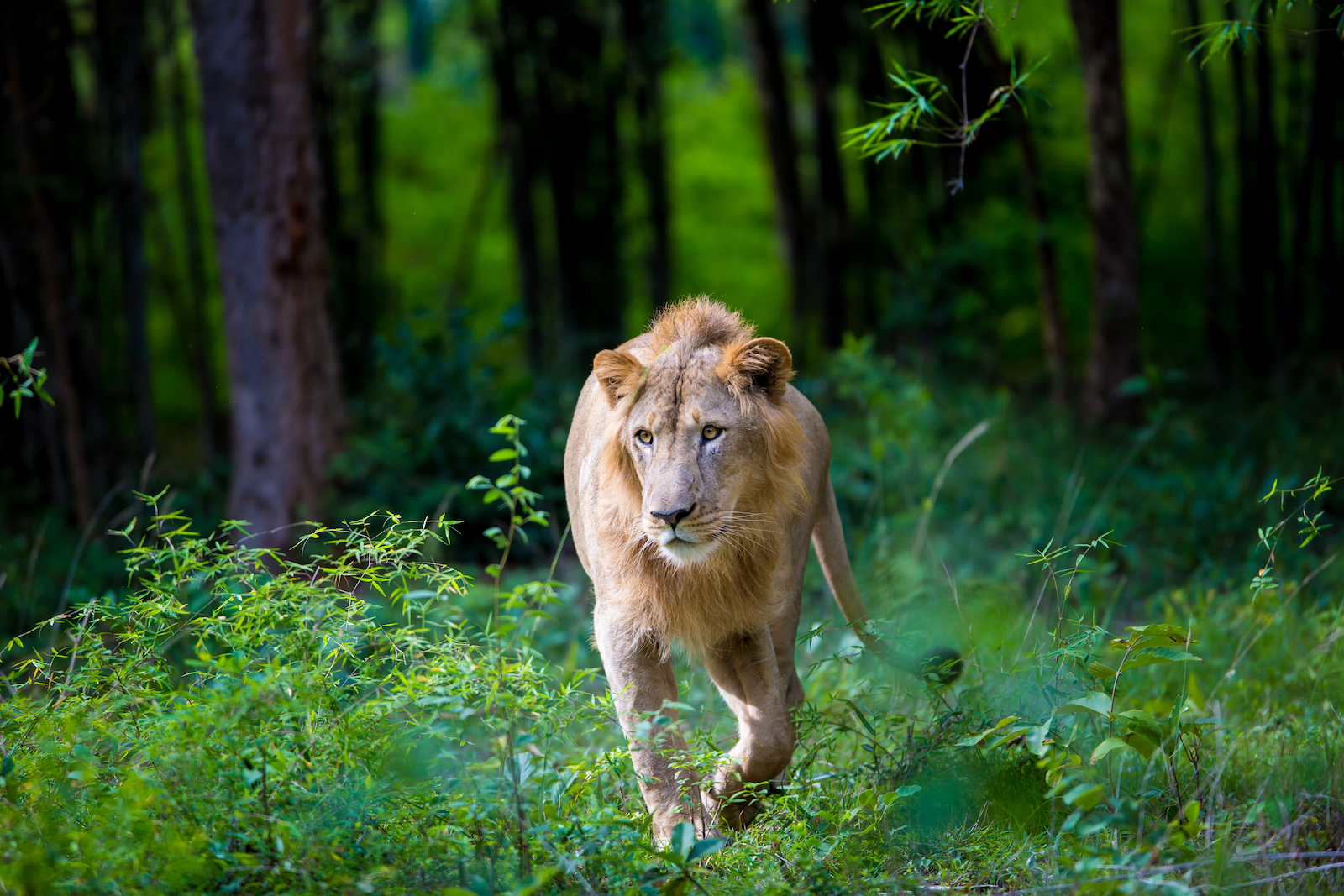
Lions tend to take loose pare hanging from their midsection, perhaps to help protect them from the piercing hooves of their frantic prey. Asiatic lions also have a fold of pare that runs along their belly, a characteristic rarely seen in African lions, co-ordinate to African Lion and Environmental Research Trust (ALERT), a research and conservation system. Compared to African lions, Asiatic lions tend to take shaggier coats, longer hair tufts on their elbows, and a longer tassel on the end of their tail. [Photos: The Biggest Lions on Earth]
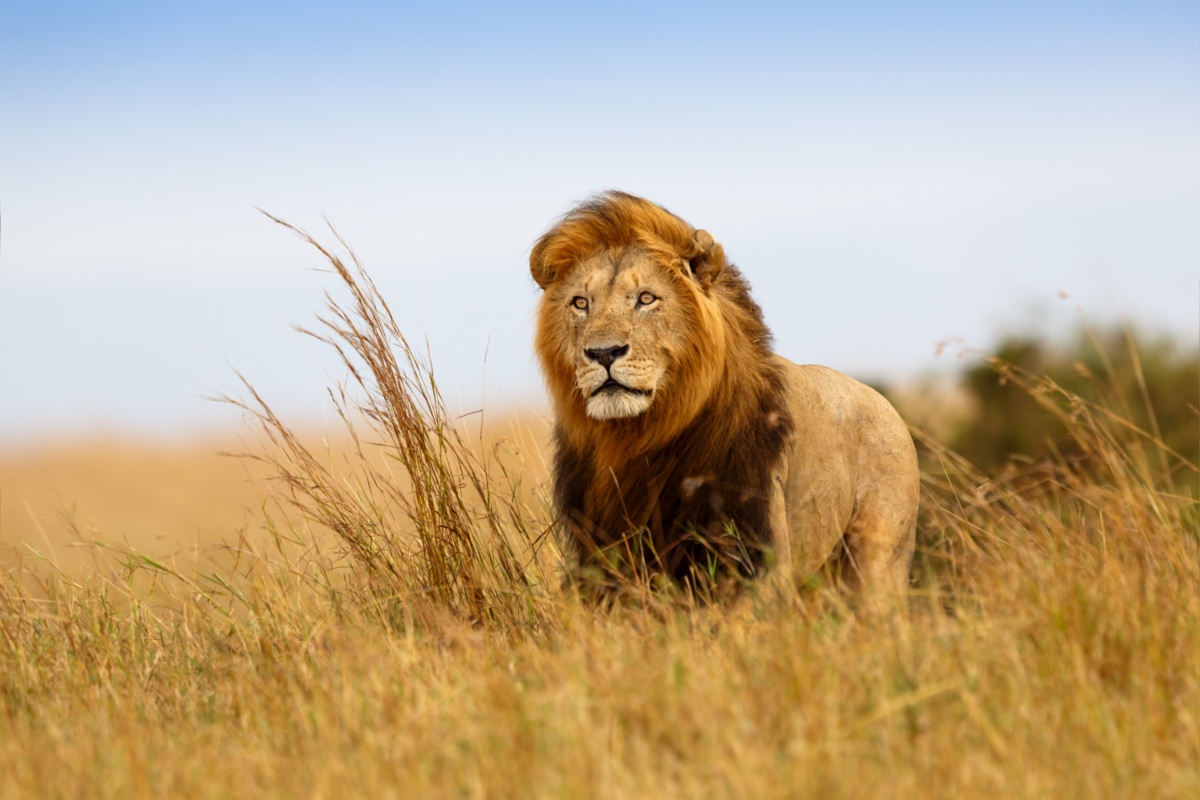
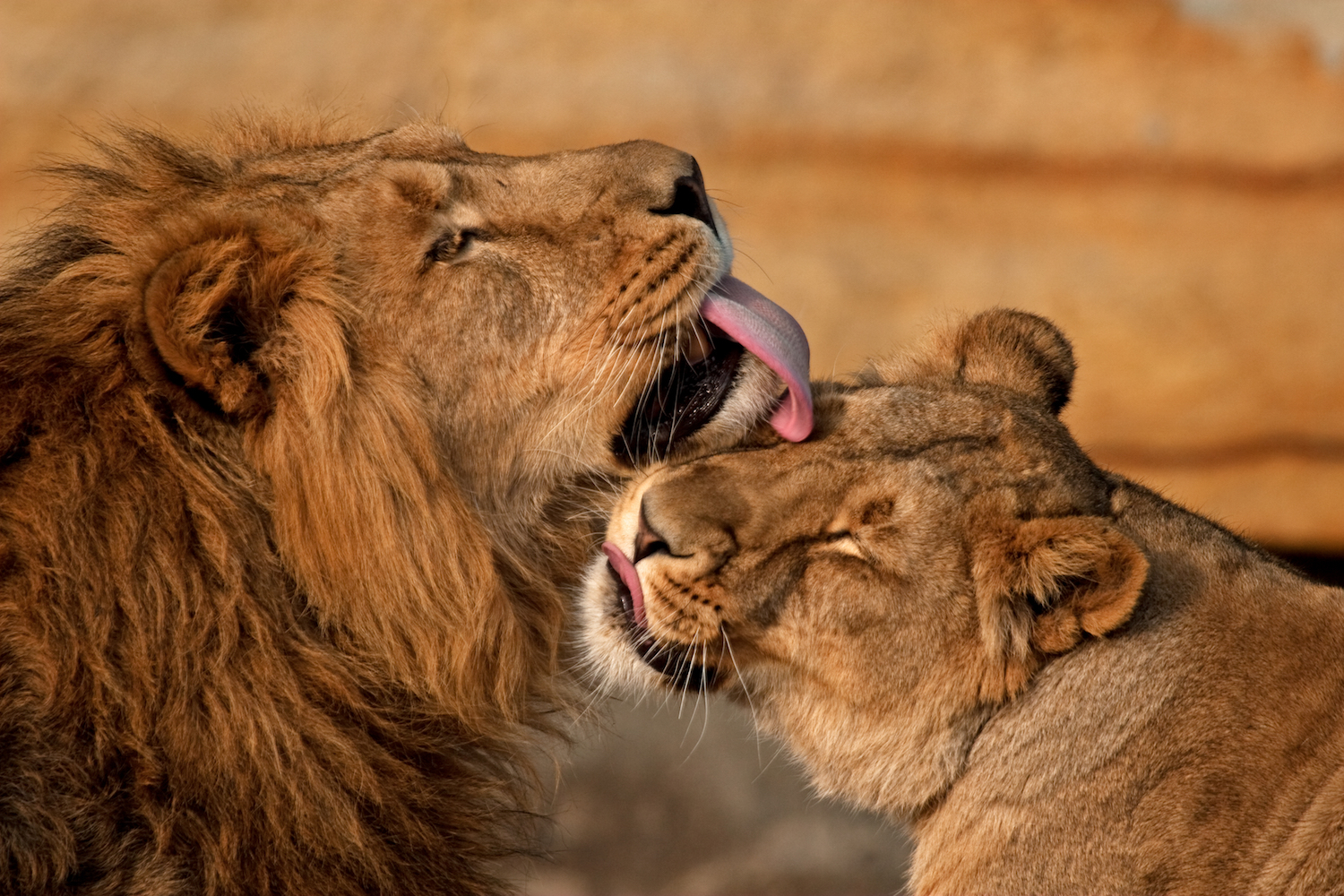
Not only are male lions generally larger than females, simply they likewise have a distinctive thick mane of pilus around their heads that females lack. The biggest and most fabulous manes are more impressive to mating females and more intimidating to competing males, according to the San Diego Zoo. The mane also protects the male person's cervix during fights over territory or mating rights. African lions tend to take bigger, more magnificent manes compared to their Asiatic cousins.
Where practise lions alive?
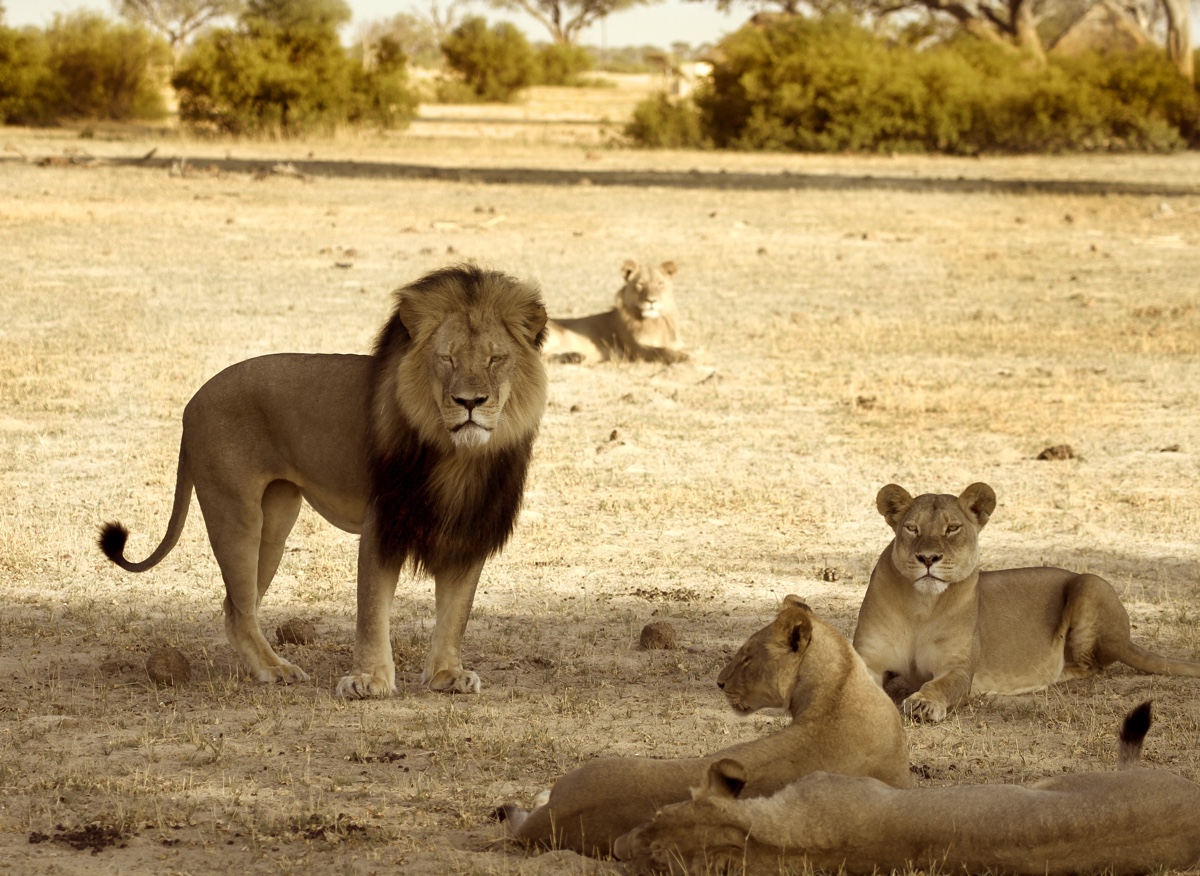
African lions live in Angola, Botswana, Mozambique, Tanzania, the Central African Republic, South Sudan and other parts of sub-Saharan Africa. Male lions defend the pride's territory, which may include an area of 100 square miles (259 square kilometers) of shrubs, grasslands and open woodlands, according to National Geographic.
Asiatic lions are constitute only in the Indian country of Gujarat, Western Bharat, where nearly reside in the protected Gir Forest National Park, a 545-square-mile (1,412-square-km) wild fauna haven. The Indian government designated this land, which includes a deciduous forest, grasslands, scrub jungle and rocky hills, as a wild fauna sanctuary in 1965, co-ordinate to Gir National Park. In addition to more than 500 lions and 300 leopards, the park is domicile to deer, antelope, jackal, hyenas, foxes, reptiles and more than than 200 species of birds.
Panthera leo pride dynamics
Lions are social cats and alive in groups called prides. Asiatic and African lion prides are very unlike, though.
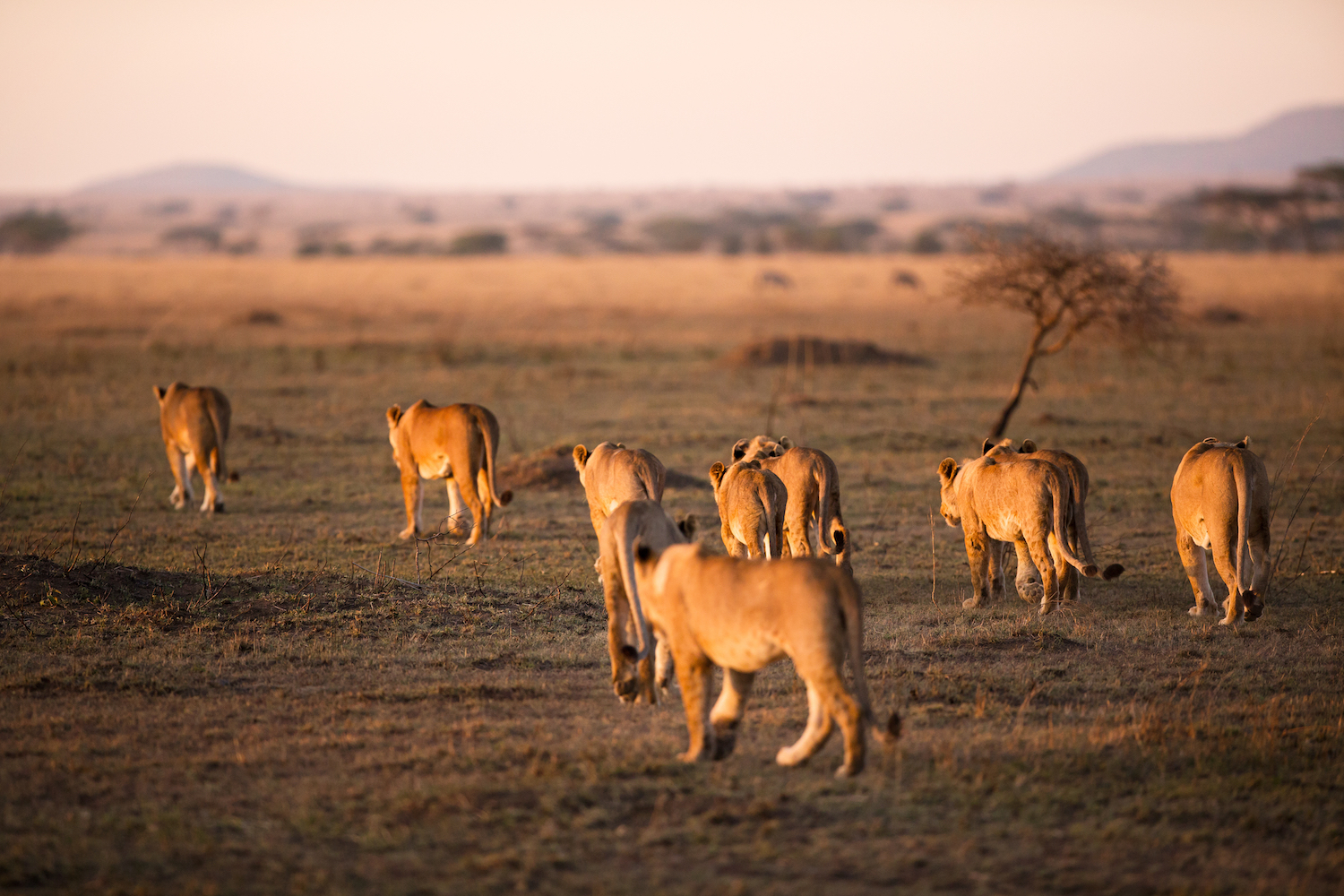
African lion prides typically consist of up to three adult males and around a dozen females and their immature, co-ordinate to National Geographic. Some prides can get extremely large, however, with up to 40 members. Females tend to remain in the pride in which they are born, then they are usually related to each other. Males, on the other hand, wander off to create their ain pride when they are old enough.
Asiatic male person lions normally won't live with the females of their pride unless they're mating or have a large kill, according to the Zoological Society of London.
Hunting
African lions tend to hunt large animals such as antelopes, zebras, hogs, rhinos, hippos and wildebeest. Asiatic lions besides hunt large animals, including buffaloes, goats, nilgai (a large Asian antelope), chital and sambar (two types of deer). Lions tin kill animals that weigh up to one,000 pounds, according to the Smithsonian National Zoo, but they will also hunt smaller animals similar mice and birds when opportunities arise.
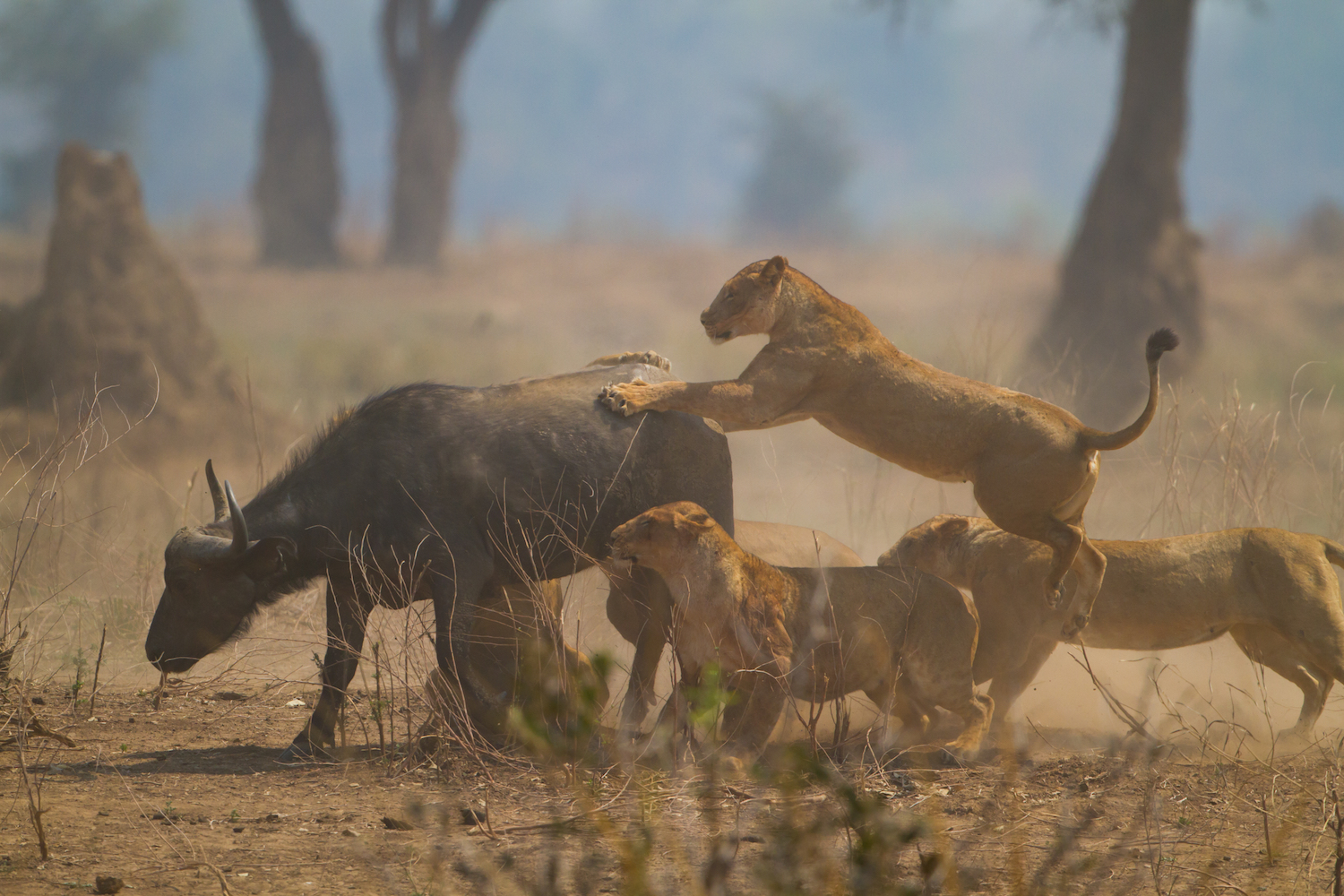
Females are the principal hunters of the pride, and work cooperatively in hunting parties to surround and have down casualty. Lions tin run upwards to 50 mph (80 kmph) for short distances and leap equally far as 36 feet (11 m), virtually the length of a school omnibus, according to the Panthera leo Habitat Ranch, a lion sanctuary in Nevada. To bring casualty down, lions spring on the backs of very large animals, but will "ankle-tap" smaller animals, pregnant they reach out their paw and swipe the preys' legs to trip them upwards, co-ordinate to Alarm. To kill their casualty, lions use their powerful jaws to snap the animal'south neck or to strangle it to death.
Very occasionally, males will join in the hunting action, particularly if the prey is extremely large, like an elephant or water buffalo. Otherwise, the main job of the male is to protect the pride. African males who alive alone tend to hide in dumbo vegetation to engage in deadfall-manner hunting, according to Carnegie researchers.
Lions tend to hunt at night and oft lurk around water holes, streams and rivers, as those areas are hotspots for prey. Lions will too scavenge, and won't hesitate to steal other predators' kills or eat the leftovers, according to Alert.
Mating and raising young
Male lions reach sexual maturity effectually two years old but are unlikely to brood earlier the age of 4 or 5 when they are large enough to try to accept over a pride and accept breeding rights, co-ordinate to Alert. Males every bit old as 16 can still produce viable sperm but usually lose their mating rights once they can no longer fight off younger males. Male African lions that are trying to take over a pride will kill all of the cubs to avoid competition. [In Photos: A King of beasts's Life]
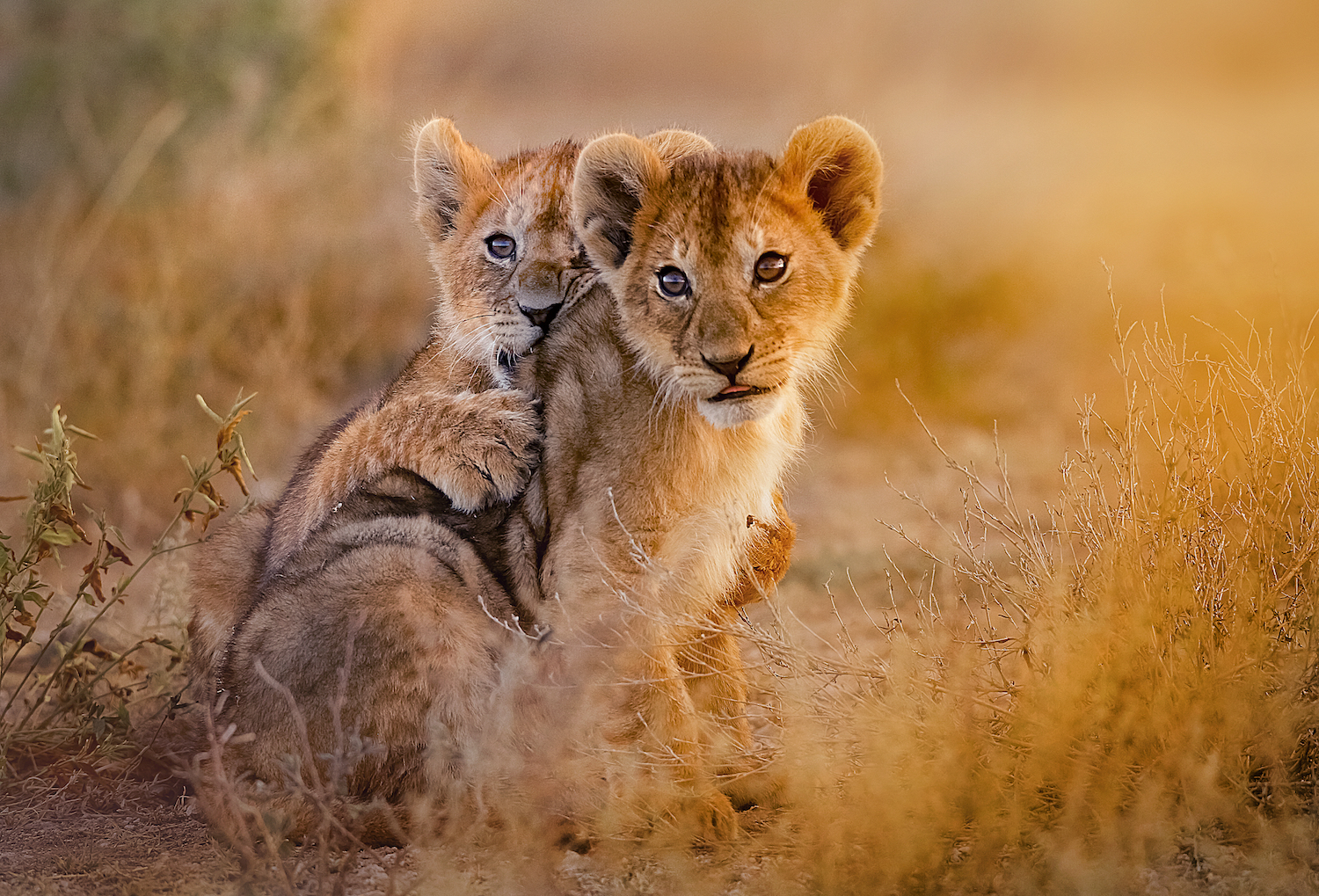
Most female lions give birth by the time they are 4 years old. The gestation menstruation for lions is around four months. Females will give nativity to their immature abroad from others, and will hide the cubs for the offset six weeks of their lives. At birth, the cubs merely weigh around 2 to 4 pounds. (0.9 to i.8 kg), co-ordinate to Beast Corner, and they're completely dependent on their mother.
All of the females in a pride will mate at effectually the same time. After the first half dozen weeks of rearing cubs alone, the female parent and cubs will rejoin the pride. Other females in the pride will contribute to raising all of their pride'due south young, and will even nurse other mothers' cubs, according to the San Diego Zoo.
Conservation status
Lions are listed as vulnerable by the IUCN's Red Listing of Threatened Species. 3-quarters of African lion populations are in decline; their electric current population is estimated at 20,000 in the wild, according to the World Wild fauna Federation (WWF). The population has been almost cut in one-half in the past two decades because of retaliatory killings by farmers (whose livestock lions consume), too as from bays hunting and habitat loss.
Asiatic lions are in an even more than perilous position as human inroad has reduced their habitat. The well-nigh recent census, taken in 2015, counted 523 lions living in Gir Forest National Park, according to PBS.org. Although small, this number is welcome news as the population has grown by near 27% since 2010, which suggests conservation measures are having a positive effect.
Additional resource:
- Watch: "Lions 101," from Nat Geo WILD.
- Learn more than about the struggle to conserve lions, from Defenders of Wildlife.
- Scout: "Mother Lioness Hunts Warthog," from BBC World.
This commodity was updated on Aug. 19, 2019 past Live Scientific discipline contributor Traci Pedersen.

Alina Bradford is a contributing author for Live Science. Over the past sixteen years, Alina has covered everything from Ebola to androids while writing health, scientific discipline and tech articles for major publications. She has multiple wellness, rubber and lifesaving certifications from Oklahoma State University. Alina'southward goal in life is to endeavor as many experiences equally possible. To appointment, she has been a volunteer firefighter, a dispatcher, substitute teacher, artist, janitor, children'southward volume author, pizza maker, event coordinator and much more.
Source: https://www.livescience.com/27404-lion-facts.html
0 Response to "Read Lair of the Lion Online Free"
Post a Comment